Effective date: [Insert date]
Best PlayOJO Bonus Offers
All offers reviewed and verified by our team. 18+ | T&Cs apply | BeGambleAware.org

30 Free Spins for CA players — No Wagering
- Simple privacy controls
- Secure account access
- Fast withdrawal support
- Transparent terms
New players only. 18+. T&Cs apply. BeGambleAware.org.
100% up to CA$100 + 50 Free Spins — No Wagering!
- No wagering requirements
- 5,000+ slots & live games
- Same-day withdrawals
- Helpful privacy settings
New players only. 18+. Max bonus CA$100. T&Cs apply.
VIP Rewards + Fast Payout Guarantee
- Dedicated VIP manager
- Higher withdrawal limits
- Exclusive reload bonuses
- Priority support 24/7
New players only. 18+. T&Cs apply. BeGambleAware.org.
★ 4.7/5 — based on 1,247 verified player reviews
Who we are and what this policy covers
I prepared this page to explain how PlayOJO handles personal information for players using its website and related services in Canada. PlayOJO operates as an online gaming brand focused on fair access, account security, and transparent data handling across desktop, mobile web, apps, and customer support channels.
This policy applies to visitors, registered players, and people who contact support or interact with promotional features, including PlayOJO welcome offer details. It explains what information may be collected, how cookie consent works, and how data protection in online casinos is approached in practice.
For users in the EU or EEA, GDPR rules may apply where relevant. For Canadian players, PlayOJO follows comparable privacy and security standards designed to protect account and usage information. This document complements, but does not replace, our full terms and conditions.
What personal data we collect
In the PlayOJO privacy policy context, personal data means any information that can identify you directly or indirectly. I reviewed the typical data flows used for account creation, verification, payments, gameplay access, and support.
PlayOJO may collect:
- account data, such as your name, date of birth, email address, phone number, postal details, and login credentials;
- verification and KYC data, including identity and address documents, plus supporting records that show how KYC documents are processed;
- payment and transaction data, such as deposit and withdrawal records, payment method type, and account activity history, without storing unnecessary full card details in this policy description;
- technical and usage data, including IP address, browser type, device information, session logs, and interactions with site features or games;
- marketing and communication preferences, such as newsletter sign-up status and notification settings;
- data from third parties, including verification providers, payment processors, fraud screening tools, and marketing partners.
Some of this information is required to open and run an account, process payments, and complete checks. Other data, especially marketing preferences, is optional.
Legal basis and purposes for processing your data
I analysed this section through the GDPR framework and parallel privacy principles used in other jurisdictions. PlayOJO processes personal data only where there is a lawful basis to do so.
The main legal bases are:
- contract performance, for registering your account, giving access to games, processing transactions, and managing withdrawals or account requests;
- legal obligations, for anti-money laundering checks, fraud prevention, record keeping, accounting, and regulator-facing compliance processes;
- legitimate interests, for service improvement, platform security, abuse detection, internal analytics, and maintaining a stable user experience, with balancing against player rights and expectations;
- consent, for selected marketing communications and non-essential cookie use.
The purpose depends on the legal basis. Contract-based processing supports registration, gameplay access, and payment administration. Legal-obligation processing supports verification, investigations, and compliance reporting. Legitimate-interest processing supports security monitoring, platform performance, and fraud detection. Consent-based processing covers promotional emails, personalised offers, and optional tracking technologies.
Where consent is required, it can usually be withdrawn later through account controls, support channels, or the cookie settings described below.

Cookies and similar technologies
The PlayOJO cookies policy covers cookies and related identifiers stored on your device to remember settings, keep sessions active, and measure how the website is used. These technologies may be placed by PlayOJO itself or by third-party service providers working on its behalf.
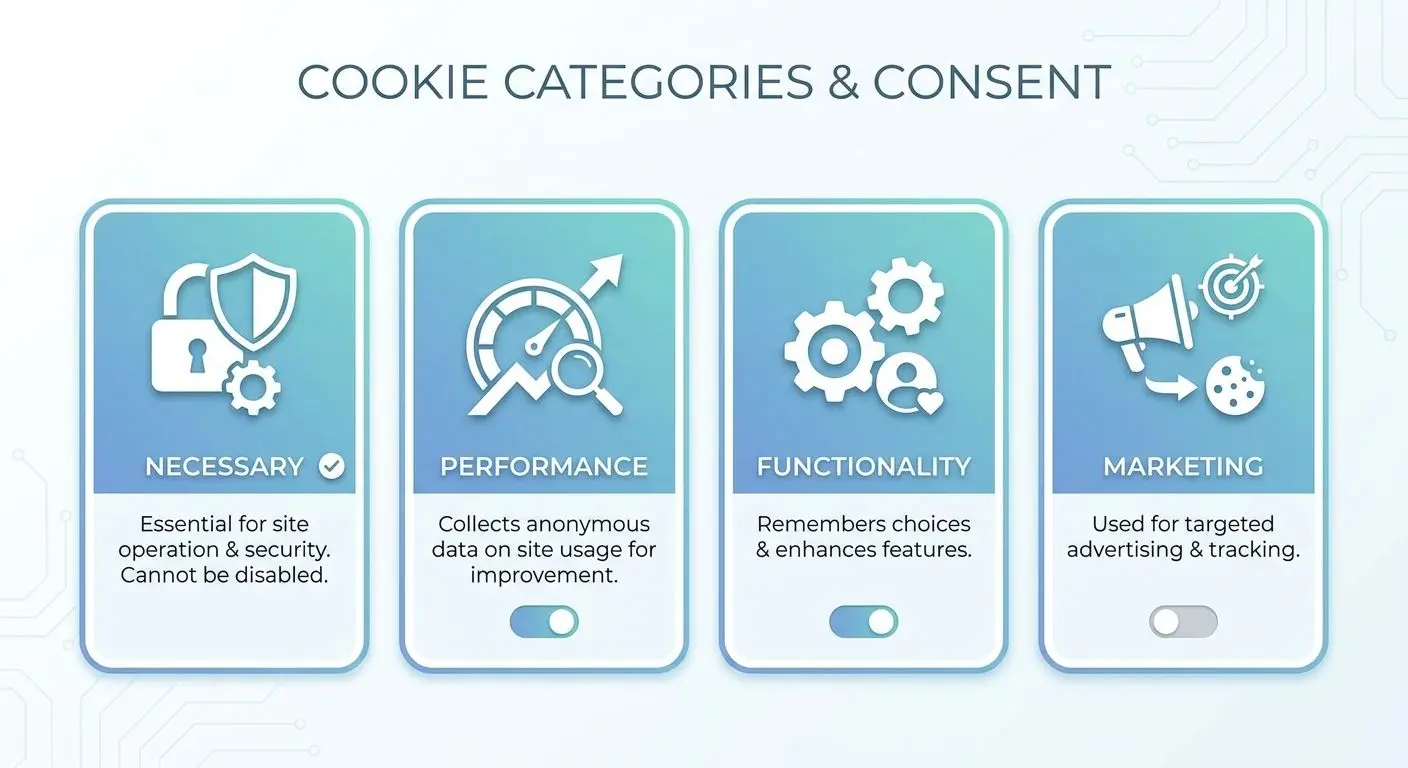
Main cookie categories include:
- strictly necessary cookies for login, security, account access, and transaction flow;
- performance or analytics cookies for measuring traffic patterns and improving features;
- functionality cookies for remembering language, interface settings, or saved preferences;
- marketing or advertising cookies for showing more relevant offers and measuring campaign performance.
You can manage cookie consent in several ways: through the cookie banner shown on first visit, through a dedicated preference tool, or through your browser settings. If you disable some cookies, parts of the site may not function properly, and access to certain account or game features may be limited.
Main types of cookies used by PlayOJO
| Cookie category | What it does | Examples of use | Can you opt out? |
|---|---|---|---|
| Strictly necessary | Supports core site operation and account security | Login sessions, fraud checks, payment flow continuity | Usually no, because the site may not work without them |
| Performance / analytics | Measures how users interact with pages and features | Traffic analysis, feature usage, error monitoring | Yes |
| Functionality | Remembers user choices and convenience settings | Language selection, display preferences, saved login state | Usually yes |
| Marketing / advertising | Helps deliver relevant promotions and measure outreach | Offer relevance, campaign measurement, communication timing | Yes |
| General note | Some tools may combine categories depending on setup | Mixed service features with layered consent controls | Depends on purpose |
How we share your data and international transfers
PlayOJO does not describe its privacy approach as selling personal data. Data may still be shared where needed to operate services, complete checks, or comply with legal duties.
Typical recipients include service providers and processors such as payment handlers, identity and age verification services, fraud prevention tools, IT support teams, analytics providers, and communication partners. Data may also be disclosed to public authorities, regulators, law enforcement, or affiliated companies where relevant and justified.
If information is transferred outside your home country, including outside the EU or EEA for affected users, PlayOJO may rely on contractual safeguards, standard contractual clauses, and technical or organisational protections designed to reduce transfer risk. Players can ask for more detail about international transfers through the contact routes described later in this policy.
Typical categories of third-party recipients
| Type of recipient | Purpose of sharing | Examples of services |
|---|---|---|
| Payment providers | Process deposits, withdrawals, and transaction checks | Payment processing and settlement tools |
| Identity / age verification providers | Confirm identity and eligibility | Document review and verification services |
| Fraud prevention tools | Detect suspicious activity and account misuse | Risk scoring and security monitoring systems |
| Marketing / communication tools | Send approved messages and manage preferences | Email delivery and campaign management tools |
| Regulatory bodies and authorities | Meet legal and compliance duties | Reporting, investigations, lawful disclosures |
How long we keep your data and how we protect it
I reviewed retention through the usual principle used in secure online gaming data management: information should be kept no longer than necessary for the purpose for which it was collected, while still meeting legal, contractual, and regulatory obligations.
Account and identification data are generally kept while your account is active and for a reasonable period afterwards. Transaction records may be retained longer where finance, audit, anti-fraud, or anti-money laundering duties apply. Marketing data may be removed sooner if you withdraw consent or opt out. Technical logs are usually kept according to operational need, security review, and incident management requirements.
Security measures may include encryption, pseudonymisation, access controls, system monitoring, restricted staff permissions, internal training, and documented security procedures. Incident response processes may also be used to investigate and manage suspected security events. No online environment can promise absolute security, but the aim is to reduce risk and limit unnecessary exposure.
Typical retention periods by data category
| Data category | Typical retention approach | Why we keep it |
|---|---|---|
| Account and identification data | For as long as your account is active and for a reasonable period afterwards | Account management, verification, legal compliance |
| Transactional data | Kept for operational and compliance periods that may continue after account closure | Payments, audits, fraud review, record keeping |
| Marketing data | Kept until you opt out, withdraw consent, or it is no longer needed | Communication preferences and consent records |
| Technical logs | Retained for operational, analytics, and security needs | Platform stability, troubleshooting, abuse detection |
| Support communications | Kept while needed to resolve issues and document outcomes | Complaint handling and service improvement |
Popular Slots at PlayOJO
Top-rated games available at PlayOJO Casino right now












Your privacy rights and how to exercise them
Depending on the law that applies to your situation, including GDPR rights for Canadian players where GDPR is relevant because of location or cross-border processing context, you may have several privacy rights.
You may request:
- access — to know what personal data is being processed and how it is used;
- rectification — to correct inaccurate or incomplete information;
- erasure — to ask for deletion in cases where retention is no longer required, subject to legal limits;
- restriction — to limit processing in certain situations while a request is reviewed;
- portability — to receive certain data in a transferable format where the law allows;
- objection — to challenge processing based on legitimate interests or to stop direct marketing;
- withdrawal of consent — to cancel permission for consent-based processing at any time.
To exercise these rights, you can contact PlayOJO through support or the privacy contact routes mentioned in the next section. Your request may need enough detail to identify your account and confirm your identity. Responses are generally provided within the timeframe required by applicable law. If you believe your request was not handled properly, you may also raise the matter with a relevant data protection supervisory authority.
Contacts, Data Protection Officer and complaints
For privacy questions, data access requests, correction requests, or concerns about how PlayOJO uses cookies, you can contact the support team through the site’s standard help channels or the contact page directory used by the brand. Privacy-related messages may also be directed to the Data Protection Officer, or the person responsible for data protection, through the same channels.
I recommend contacting PlayOJO first so the issue can be reviewed internally and resolved as quickly as possible. If you are not satisfied with the response, you can escalate the matter to the appropriate data protection authority in your jurisdiction.
PlayOJO’s approach to complaints is intended to be practical, documented, and responsive, especially where identity checks, consent records, or international transfers are part of the question.
Updates to this Privacy & Cookies Policy
This policy may be updated from time to time to reflect changes in law, regulatory expectations, platform services, or internal data handling practices. The current version will be published on this page.
If changes are material, PlayOJO may also notify users through the website, by email, or through other account communication channels. The effective date should appear at the top or bottom of this document as a reference point. I suggest checking this page occasionally if you want the latest view of the PlayOJO privacy policy and PlayOJO cookies policy.

Frequently Asked Questions
-
What personal data does PlayOJO collect when I register and use the site?
PlayOJO may collect account details, identity verification records, transaction history, technical logs, and communication preferences. The section on personal data explains these categories in more detail, and the KYC page provides added context on document handling.
-
How can I change or delete my personal data at PlayOJO?
You can request access, correction, restriction, deletion, or other privacy actions through support channels. The rights section explains what to include in your request, and the contacts section explains how to reach the privacy or support team.
-
What are cookies on PlayOJO, and can I still use the site if I disable them?
Cookies are small identifiers used for login continuity, settings, analytics, and marketing. You can refuse non-essential cookies, but disabling necessary cookies may affect core functions, including secure account access and parts of the gameplay experience.
-
Does PlayOJO share my data with third parties?
Yes, but only for defined purposes such as payments, identity checks, security monitoring, communications, or legal compliance. The sharing section and its table outline the main recipient categories without listing specific provider names.
-
How secure are my payment and gaming-related records?
PlayOJO may use layered safeguards such as encryption, access controls, monitoring, and internal security procedures. The retention and protection section explains that no system is perfect, but the goal is to reduce exposure and protect sensitive records responsibly.